Much of my work is proprietary. Browse this curated selection of my UX/UI/LXD projects.
I’d love to talk through my work in person!
My current work-in-progress:
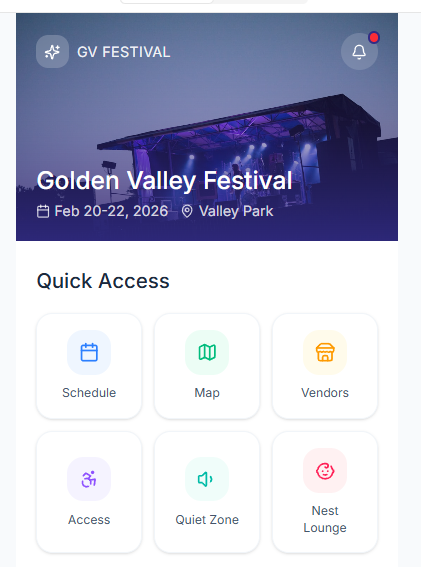
The Golden Valley Festival was held in 2025 after a 5-year hiatus, having broken its decades-long run during the covid years. This reboot brings opportunities for technological updates and analytics. From our 2025 lessons learned, I’m exploring the question:
How might we make the annual Golden Valley Festival a more inclusive event?
This is a mid-fi functional prototype I created with Figma Make and Claude AI. Further updates include back-end coding with Cursor and an added QR Code connected to a Google survey.
Website Redesign (Responsive )
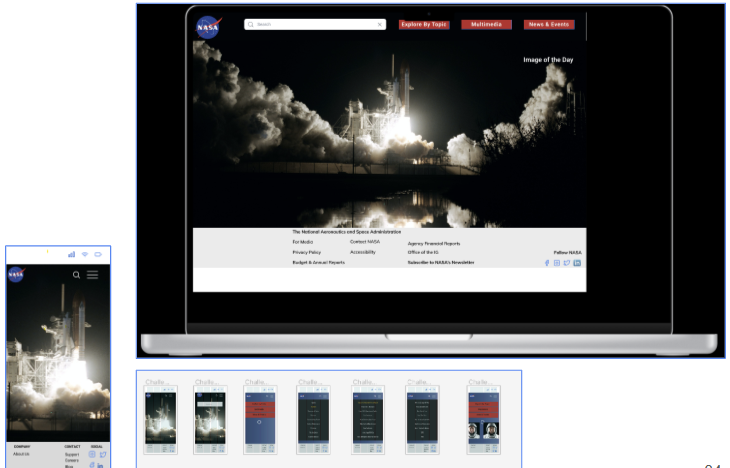
NASA Website Redesign – UX/UI Boot Camp Project
For my first UX/UI Boot Camp project, I selected NASA’s website for a responsive redesign—focusing on improving usability, accessibility, and content clarity across devices.
As part of a small team, we collaborated in Figjam on redlining, affinity diagramming, and initial site analysis.
My Role:
I independently conducted user testing, contributed to the affinity diagram, and developed a user persona based on research insights. I used Figma to design low-, mid-, and high-fidelity responsive prototypes, incorporating feedback throughout each iteration. My process also included heuristic evaluation, style tile development, sitemap analysis, and a formal report with design recommendations.
Click below to view the full case study and interactive prototypes.
Mobile - Conceptual
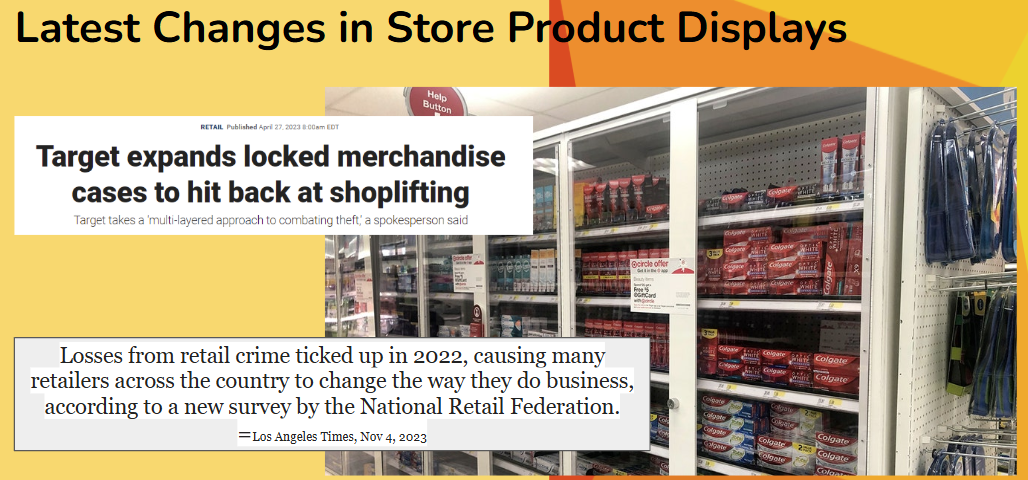
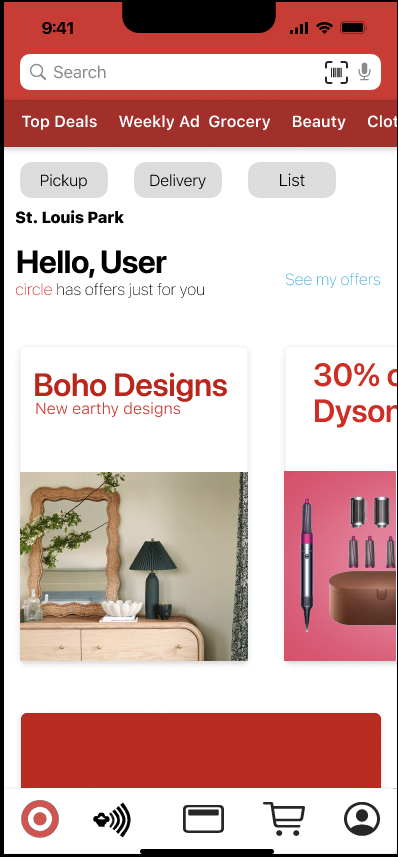
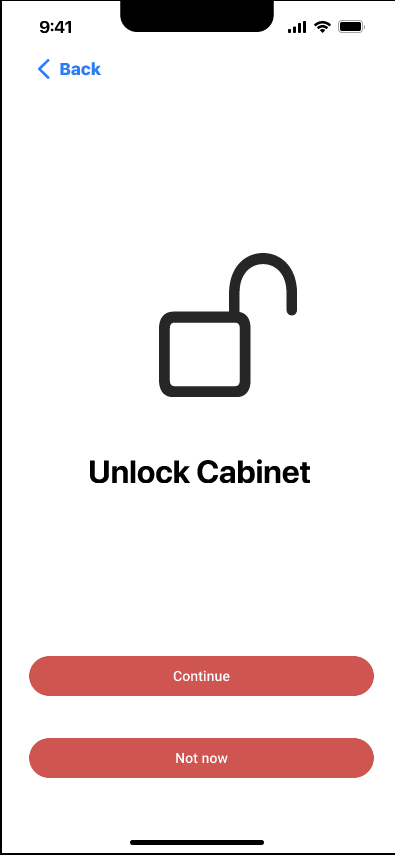
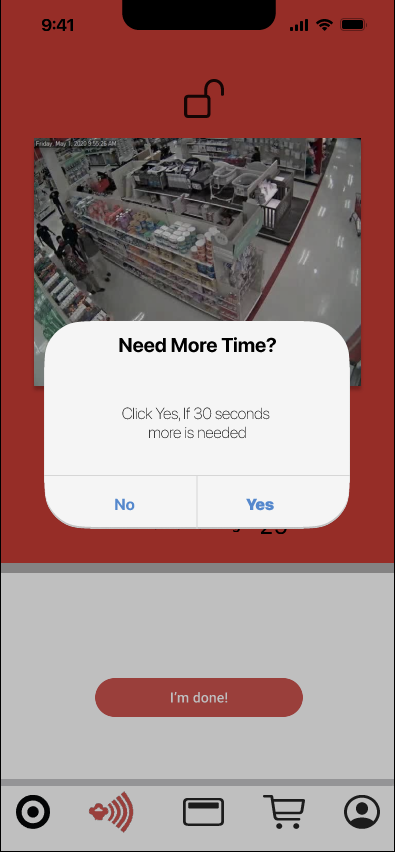
Our team was tasked with designing a unique mobile app experience. We brainstormed ideas and designed an app to streamline product access in secure retail environments using Figjam; and using Figma to develope a prototypes and wireframes for a mobile shopping app that allows customers to unlock and retrieve products directly from secure cabinets using their phones.
My Role:
I was involved in every stage of the UX process—contributing to ideation, user testing, persona development, affinity diagramming, and journey mapping in Figjam; and wireframing, and prototyping in Figma. I also led the team’s presentation strategy, designing the slide deck and crafting a compelling narrative that opened with current industry trends to contextualize the problem and highlight the need for our solution.
Mobile - Conceptual
The assignment was to envision a new mobile app to solve a real-world need.
My Role:
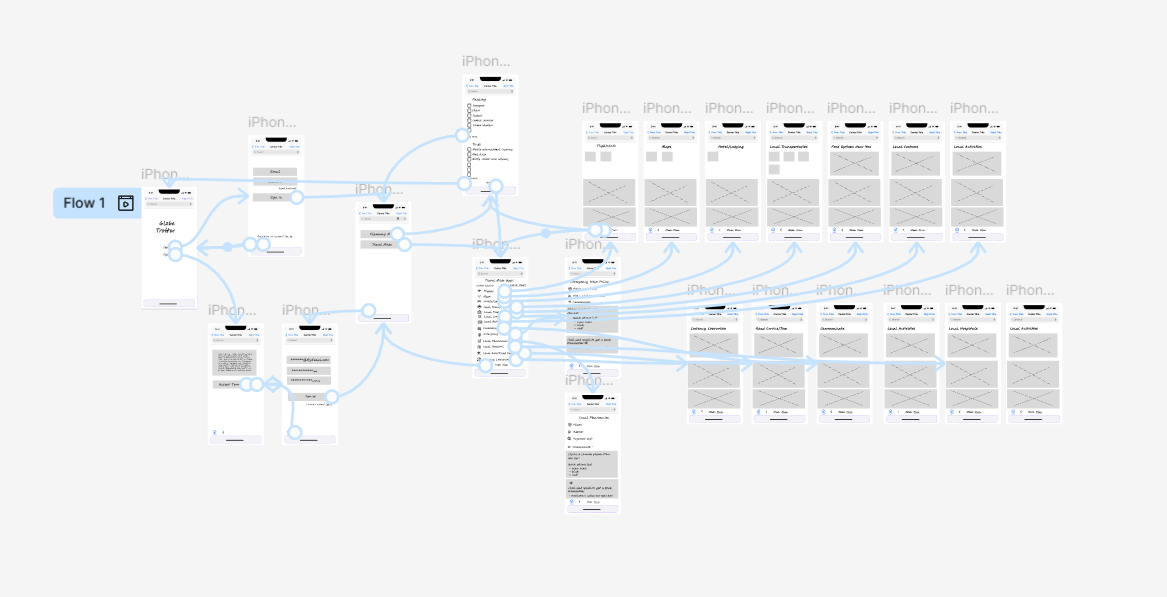
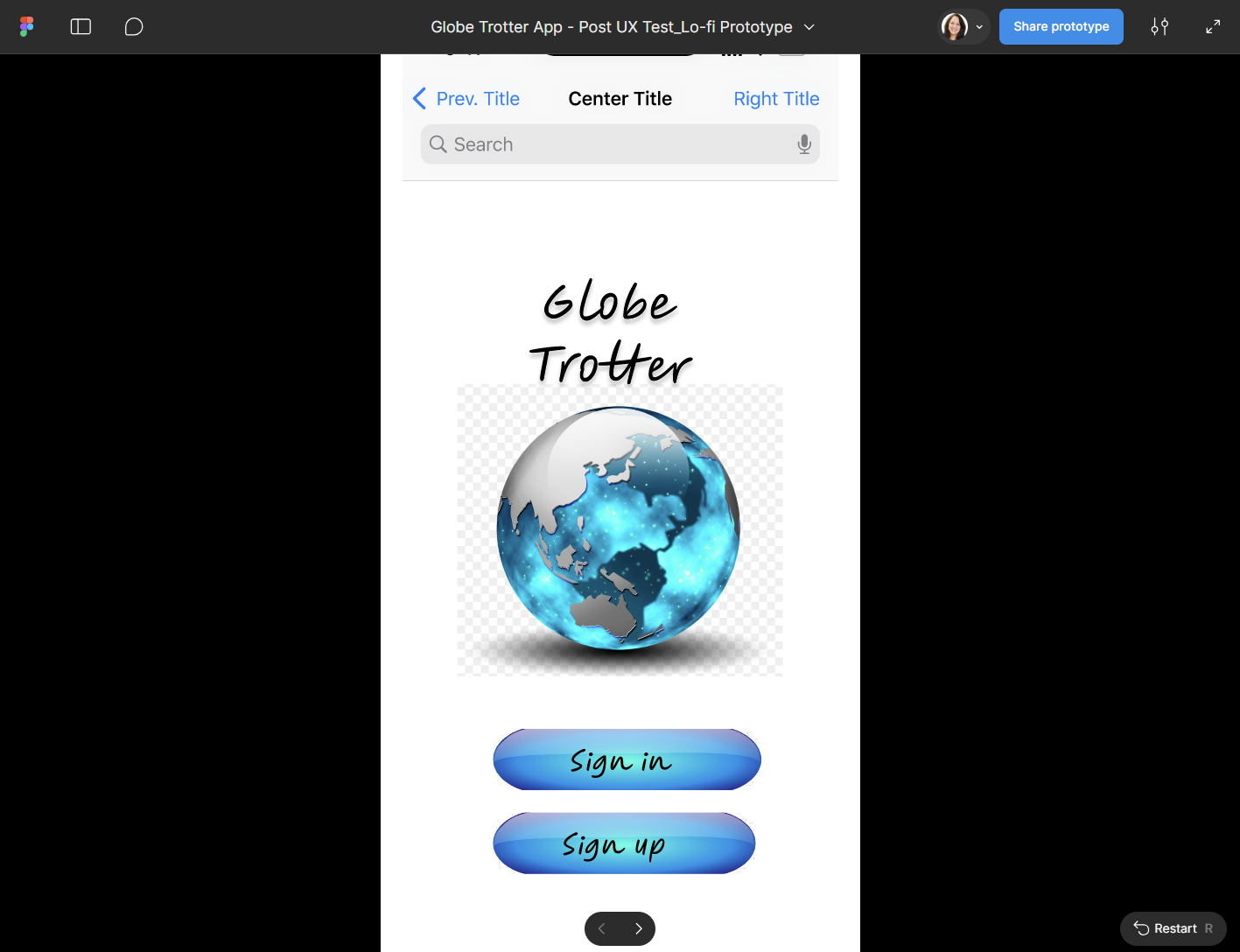
I had an idea for an app that would combine GPS technology and translation to help travelers more easily communicate, or locate a critical service, when traveling in foreign countries. I created the survey, conducted interviews, created wireframes, low-, mid-, and high-fidelity prototypes, conducted user testing, and wrote the analysis. I created the wireframe in Figma.
UCare’s New SharePoint Site Design
During our organization’s migration to SharePoint Online, I volunteered to co-lead the design and development of our team’s new SharePoint Communication site. As the only team member with UX research, design, and prototyping experience, I created an initial low-fidelity prototype to support early ideation and gather team feedback. I participated in iterative design sessions, contributed to design decisions, and collaborated on layout and content strategy.
Once we reached the high-fidelity stage, I designed and led usability testing, synthesized the findings, and delivered actionable recommendations. My analysis directly shaped the final design and improved both usability and adoption of the site.
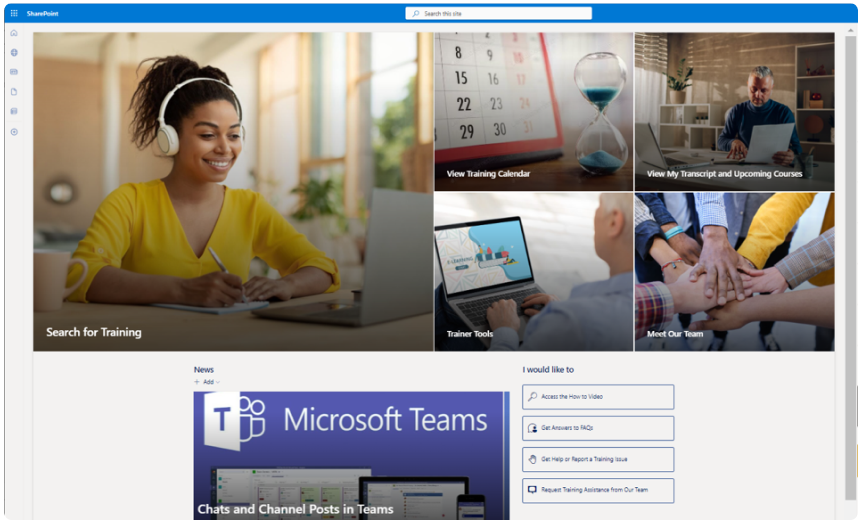
(Pre-test) Scrolling High-fidelity Prototype
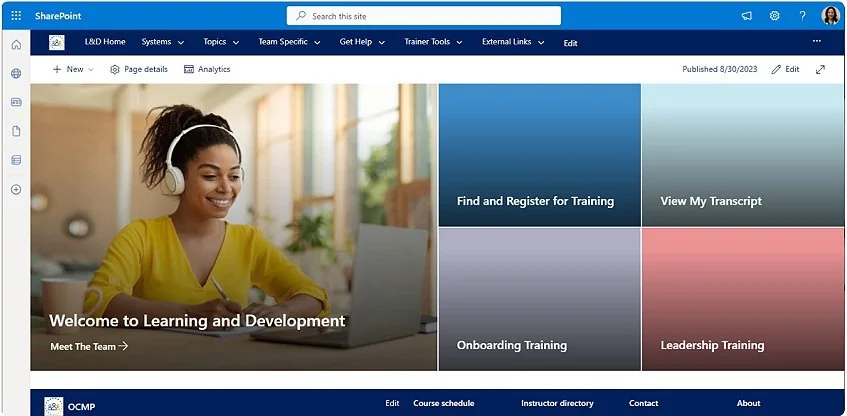
(Post-test)
High-fidelity Prototype: scrolling replaced with drop-down menus, tiles changed to gradient colors with larger font and more descriptive text.
UCare - Multiple Projects (Training Environment Design, eLearning Redesign, Learning Management System Upgrades)
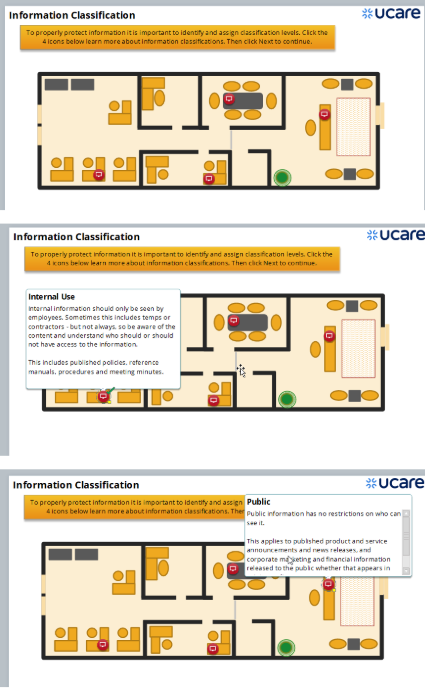
SAAS Platform Rollout: In 2019, UCare faced a major challenge: launching organization-wide training for a new customer care platform that was still under development, with UAT and QA testing still in progress.
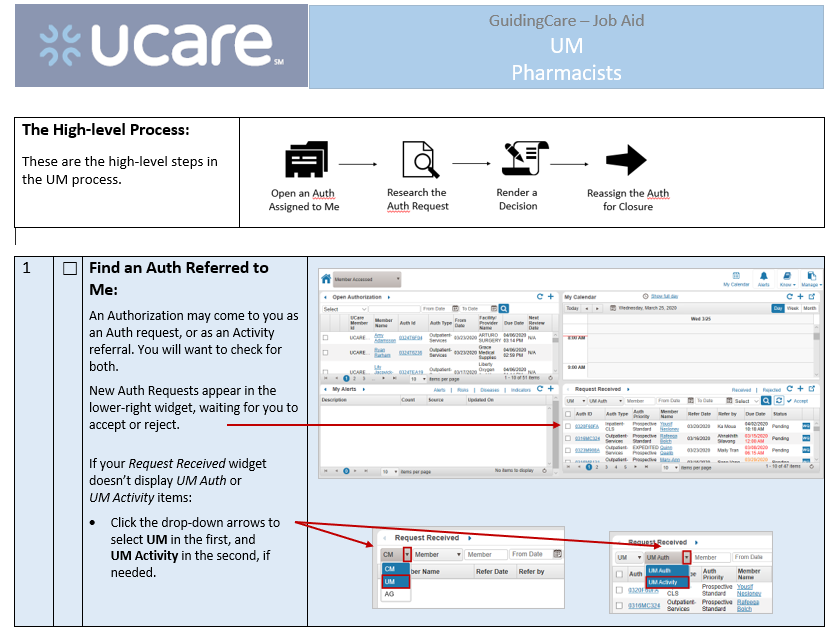
My Role: I participated in UAT and QA review meetings, led the training needs analysis, and managed the end-to-end development of the training initiative. This included designing mock-member data and training environments, developing instructor-led and eLearning content, and creating a comprehensive rollout plan across all departments.
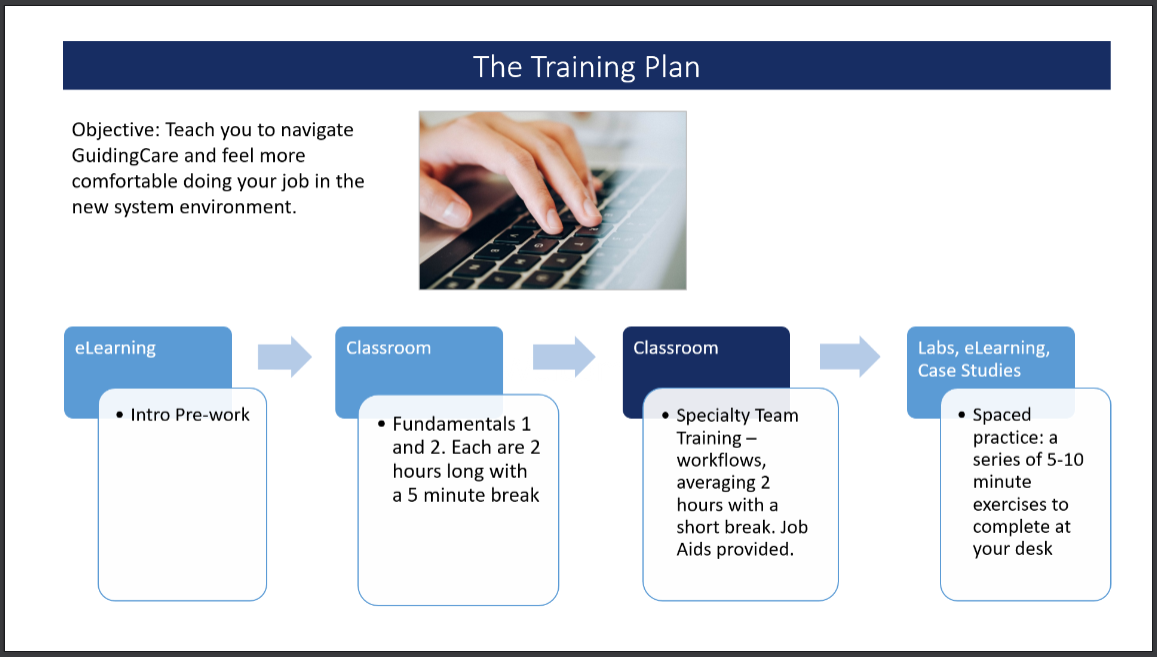
I mentored trainers in eLearning design/development, and designed a multi-layered learning experience that included pre-work, classroom sessions, specialty-track instruction, job aids, and spaced-repetition strategies to support long-term knowledge retention.
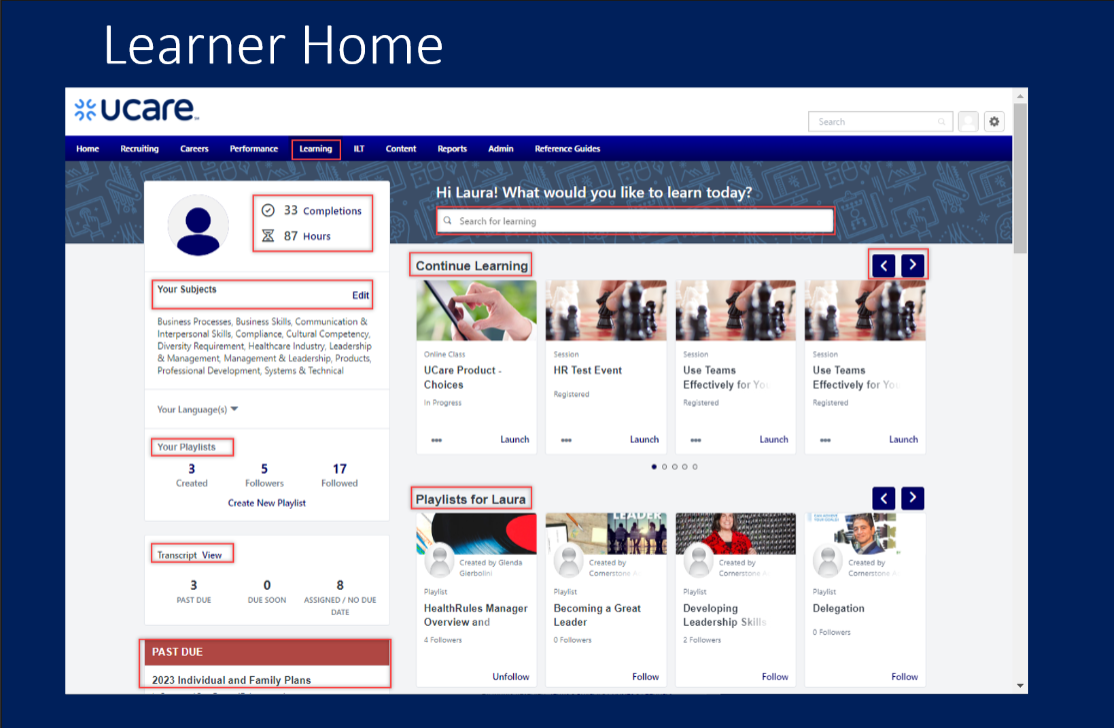

LMS Administration: UCare was without a LMS Learning Administrator for 6 years. The Cornerstone Learning platform had remained largely unchanged since its 2014 installation—missing out on updates and engaging features.
My Role: As UCare’s Cornerstone Learning Administrator, I attended a 2-week LMS boot camp and quickly identified several areas for improvement. I proposed and implemented key upgrades, including transitioning from a static, outdated homepage to a dynamic carousel design that improved user engagement, supported eLearning and training events, organized curricula, and playlists. I also supported LMS contract negotiations.
These initiatives involved close collaboration with UCare’s IT department, Leadership, L&D Operations team, and Cornerstone support to ensure seamless rollouts and lasting impact.
Instructional Design, eLearning Design and Development: Prior to 2020, UCare outsourced basic eLearning development—this was an expensive solution that failed to reflect UCare’s distinctive approach to customer care.
My Role: The courses I inherited were created in Lectora, and primarily consisted of click-to-reveal blocks of text with no context and limited learner interaction.
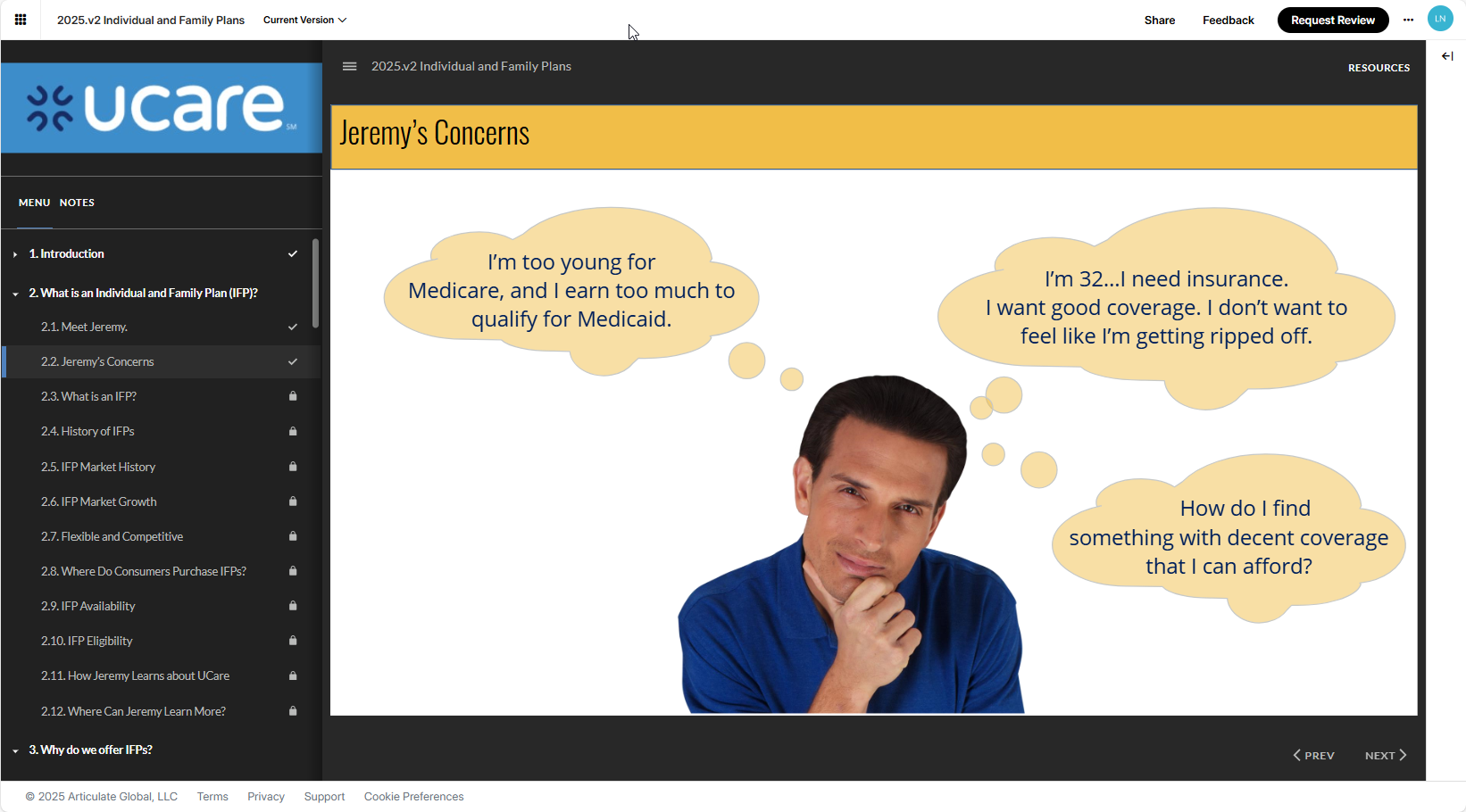
I evaluated the existing training, interviewed subject matter experts, and rapid-prototyped new scenario-based solutions in Articulate Storyline. I served as both instructional designer and eLearning designer/developer for all product and compliance training and redesigned many courses to be interactive, scenario-based, visually engaging, and aligned with UCare’s brand voice and service philosophy.
Over the past 5 years, I created numerous eLearning courses (Compliance, Product Training, Medicare Star Ratings, GuidingCare Software Training, Customer Service). I also created tools and templates to help other team members. This included a “Rise Wrapper” which was used across the company to professionally polish and deliver corporate meeting videos through the LMS in a way that connects context and materials.
My role also included mentoring several team members in Successive Approximation Model (SAM) - an agile project management tool, instructional design, eLearning design and development, user testing process steps, analysis, and application.
Process Improvement Projects: By 2022, UCare’s annual curricula rollout had expanded significantly—from just 4 courses in 4 stacked curricula to a much broader offering including communication, leadership, and DEIA topics. This growth created a multi-layered curricula-within-curriculum, and made LMS staging increasingly complex for both end-users and administrators — consistently crashing while staging the multi-layered curricula.
In response, I redesigned the complete rollout process, and converted all eLearning courses to contextual, scenario-based courses.
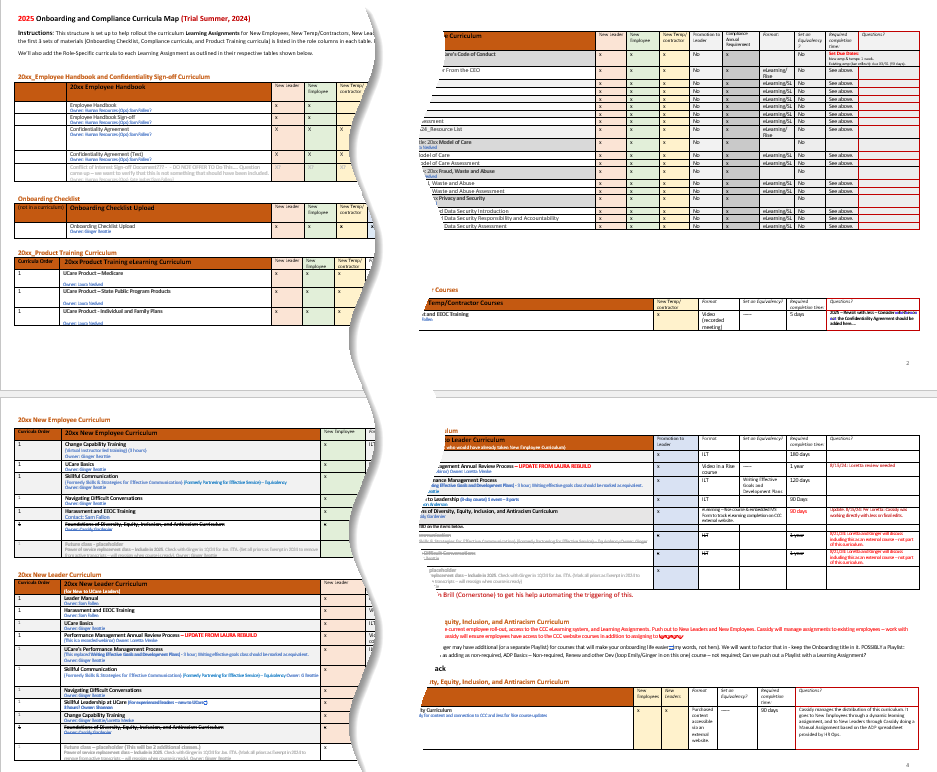
I created smaller individual curricula, organized in a “Curricula Map”. This gives an “at-a-glance” review/update method and completely eliminated prior Cornerstone crashes during rollout.
Team Process Documentation and Mentoring: I paired the Curricula Map with a process flow documenting our 38-step process (to go from course updates to learner assignment rollout). I accompanied this process flow with a multi-page illustrated spreadsheet that details each step and the SME communication required at each touch-point. I also mentored team members to create redundancy for this role sharing knowledge of project management, eLearning design and development, LMS implementation, SME communication, and learning assignment rollout using this new system. This ensured consistency, smooth execution, and resource balancing.
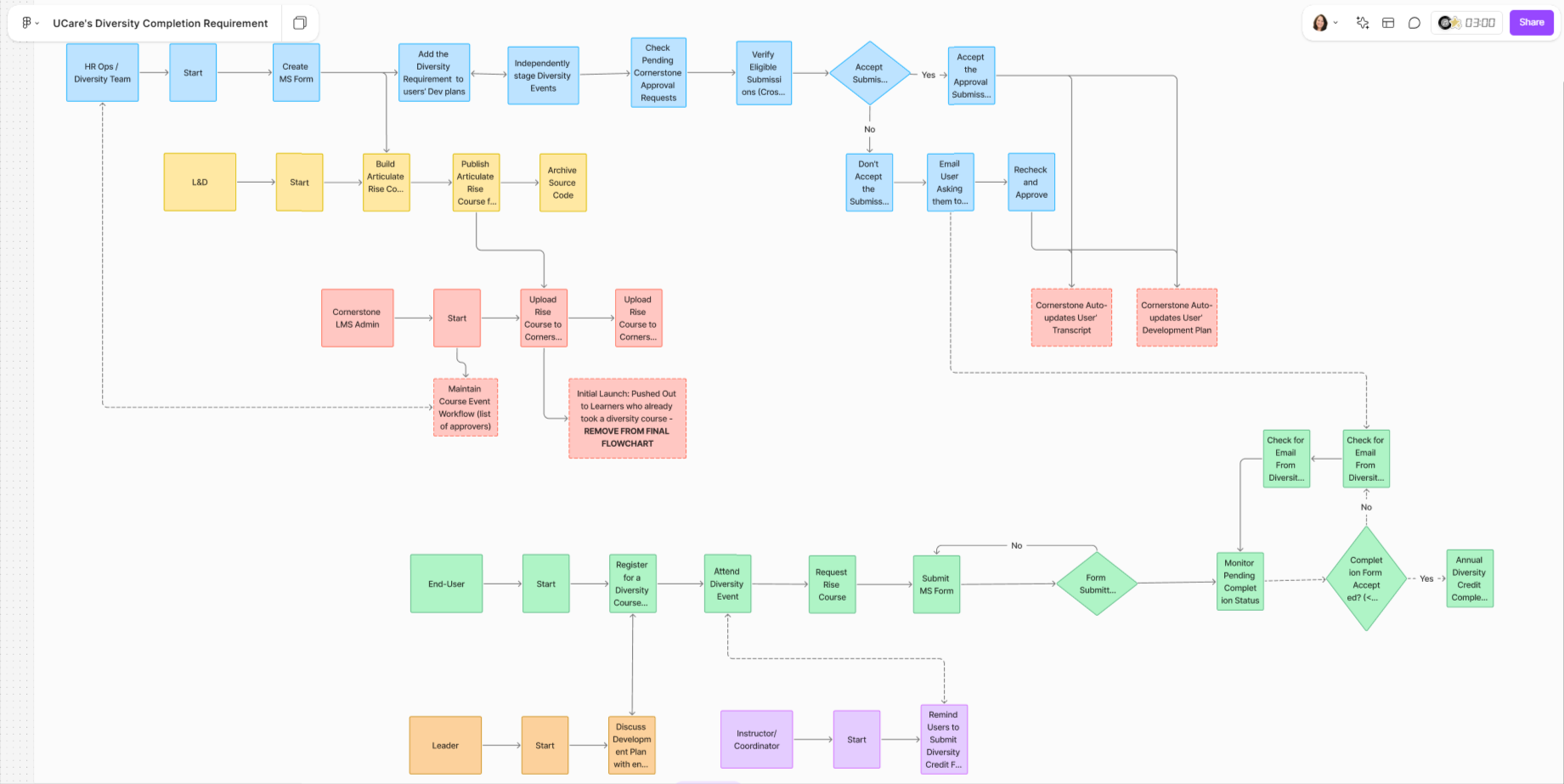
Complex Process Flows: In 2024, UCare identified a need to streamline the tracking of employee DEIA completion requirements using their Cornerstone LMS. The process was complex due to the wide range of course options and the need to track progress (and course completion approval) across two separate areas of the Cornerstone platform: Performance and Learning.
I prototyped and tested a connectivity solution in our Cornerstone Pilot environment, then created detailed process flow documentation in Figjam. The final solution touched HR Operations, the L&D team, Cornerstone Admin, Instructors, and Learners.
I then created an Articulate Rise course that integrated an online Microsoft Form to trigger the course completion approval process.
New Virtual Instructor-led 10-Day Certification Program
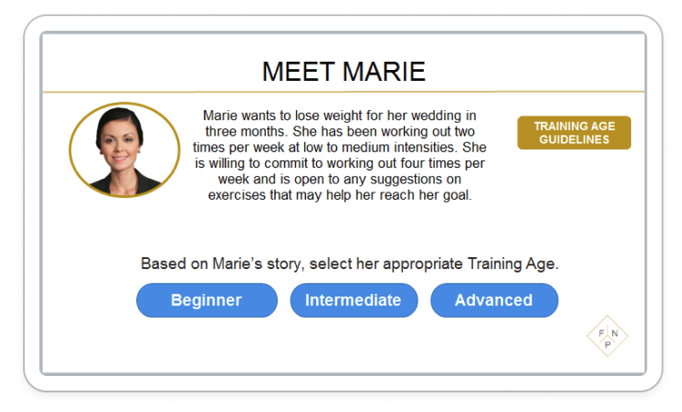
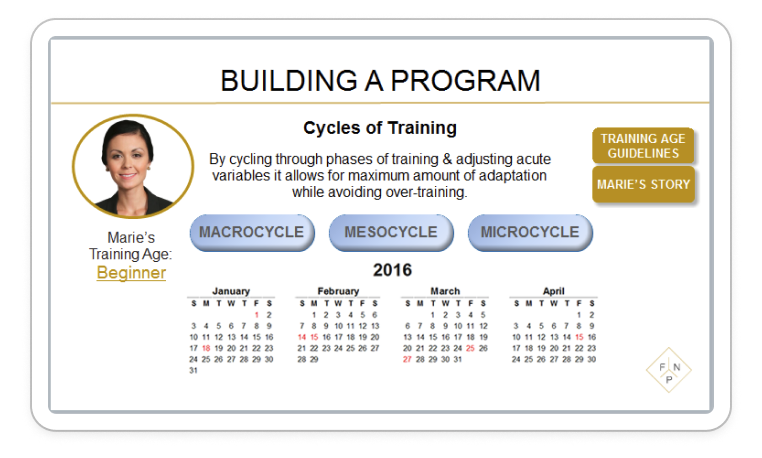
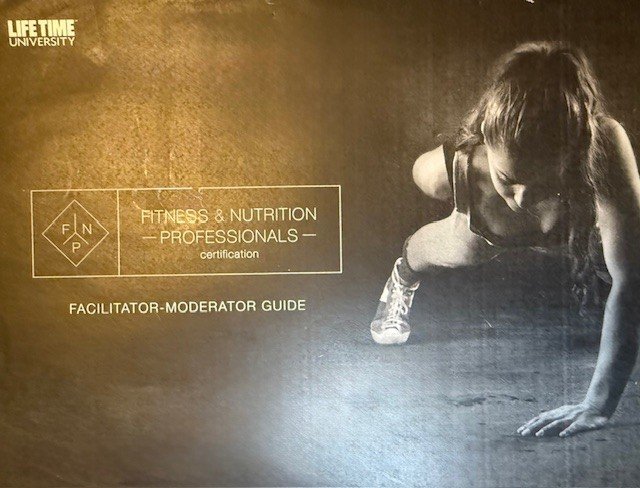
Online Learning Solutions - eLearning and Instructor-led: LifeTime Fitness needed to convert their 10-Day, in-person Fitness Trainer Certification Course to a virtual curricula.
My Role: project manager, instructional designer, and eLearning designer/developer. Topics covered included: Brand and Business, Know It (Metabolic Science), Nourish It (Nutrition), Move It (Programming).
I designed and developed the scenario-based virtual instructor-led training (VILT) in Word and PowerPoint, and eLearning courses in Articulate Storyline for delivery through Adobe Connect, reporting into Cornerstone LMS.
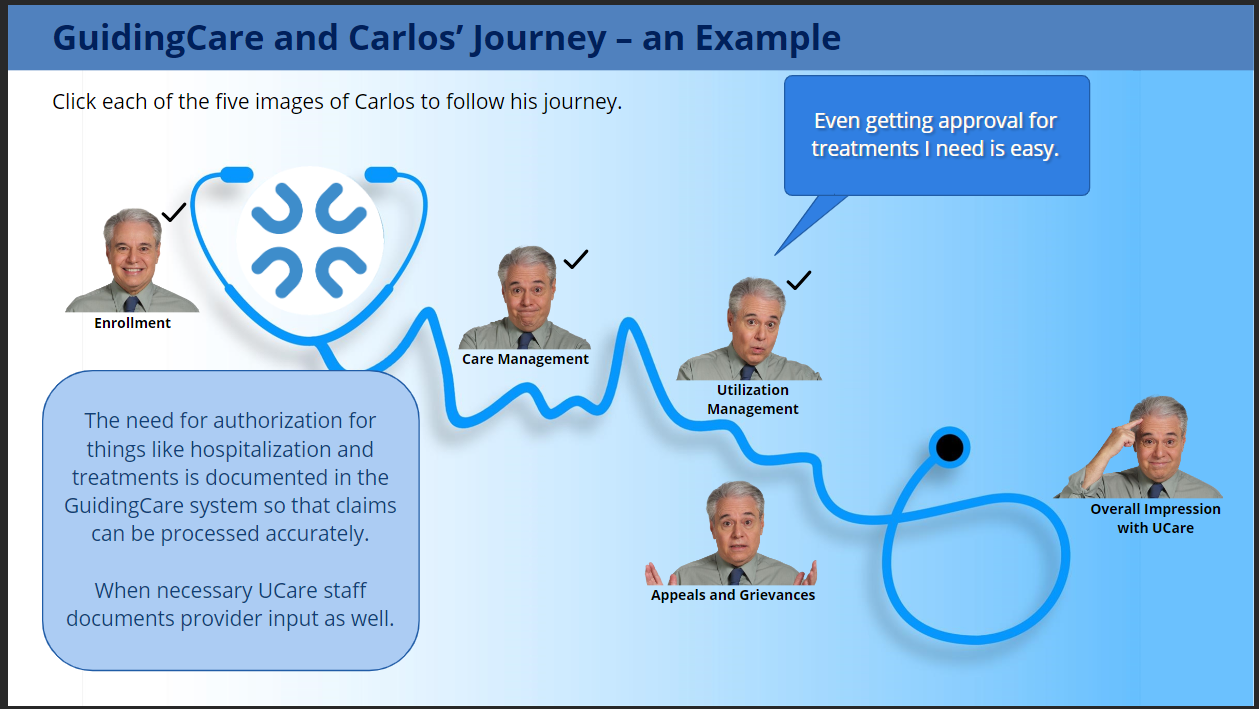
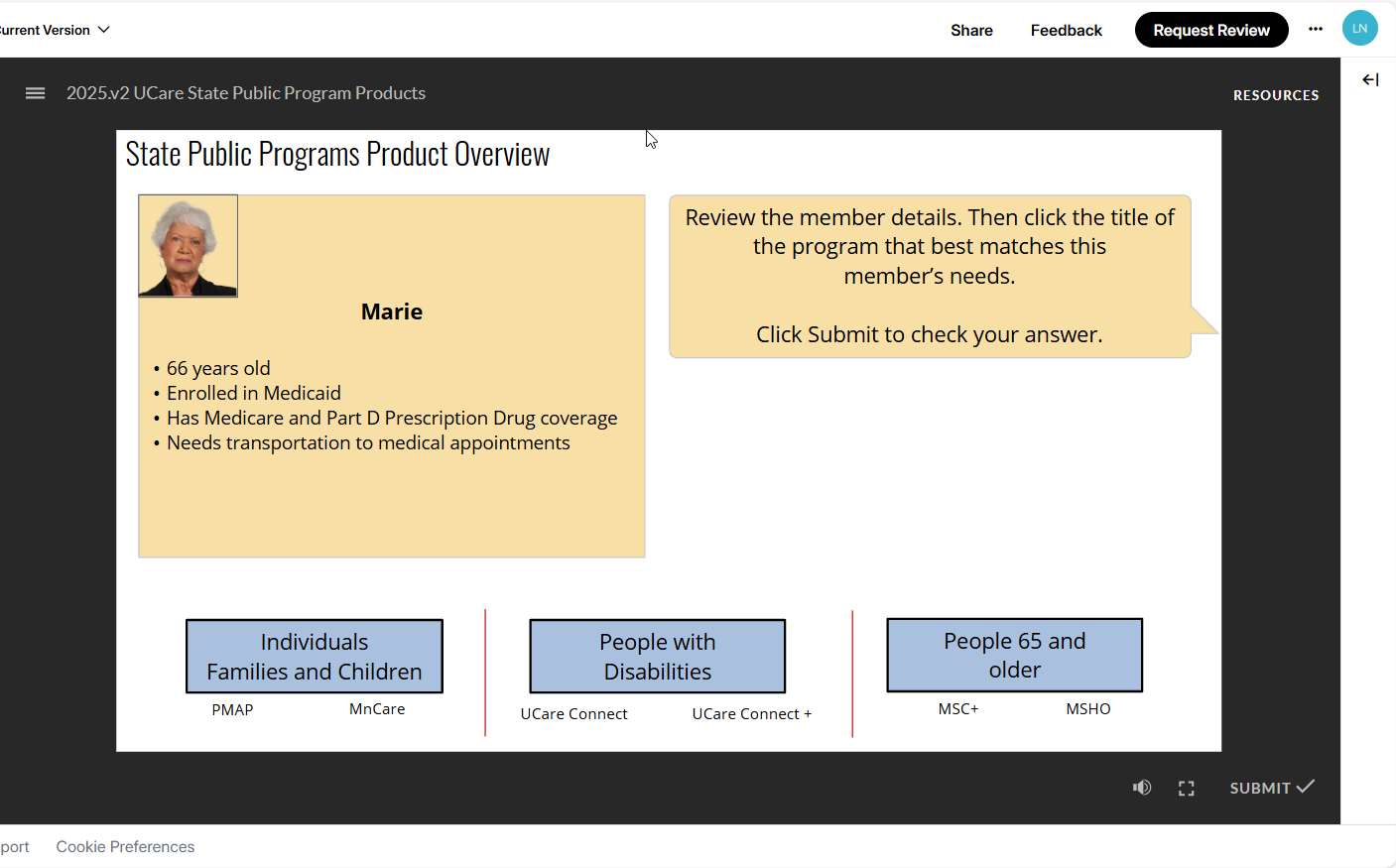
This sample activity shows a sample interaction converting a 2+ hour narrated PowerPoint, into an interactive, scenario-based simulation. I prototyped, designed, and built this interaction in Articulate Storyline.
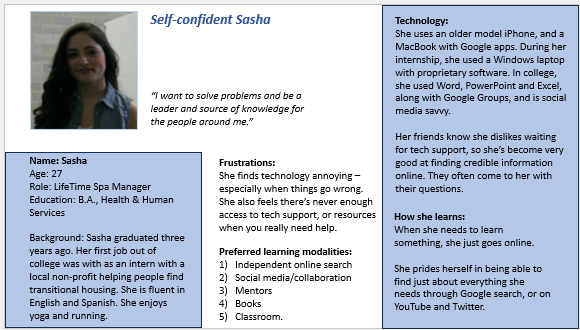
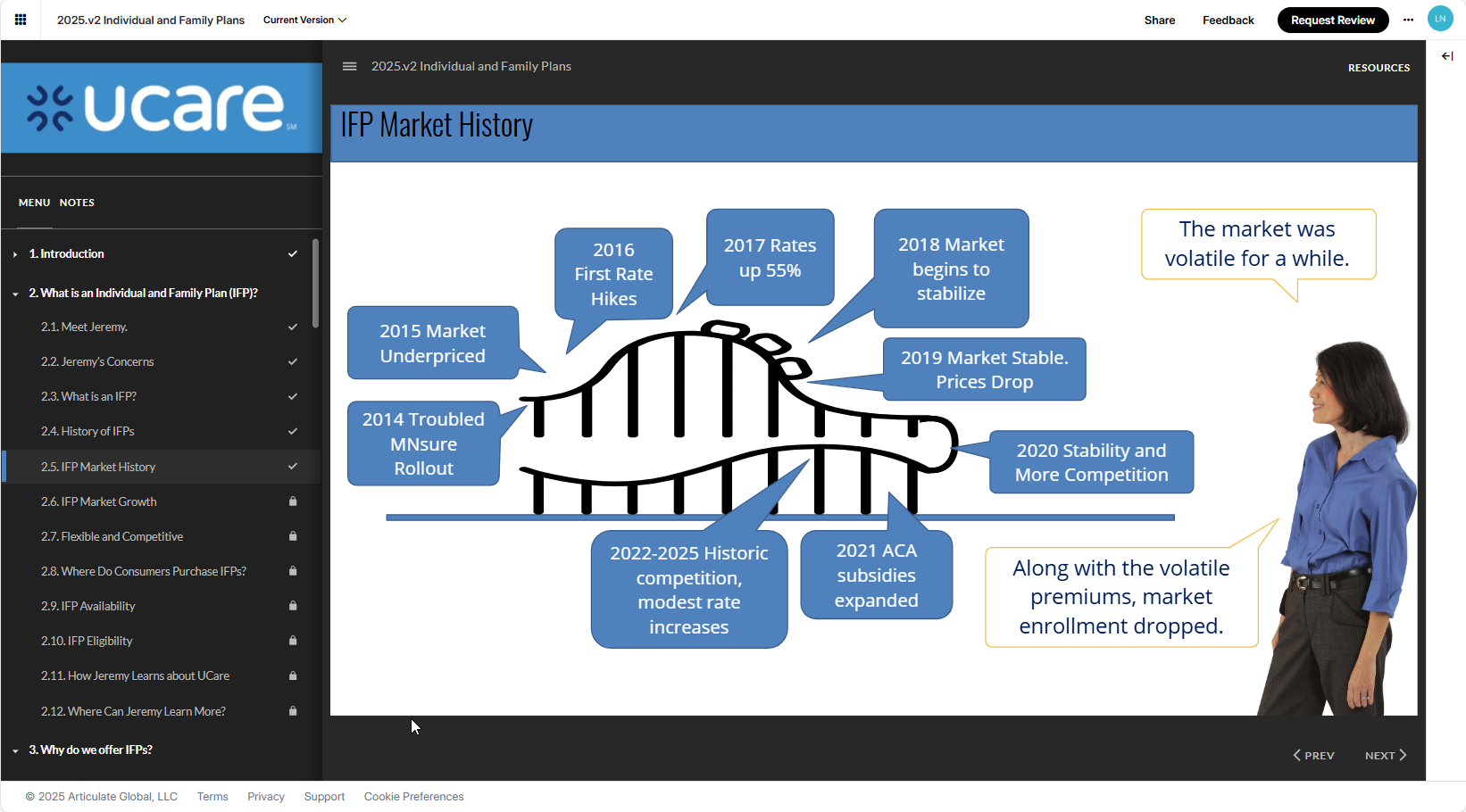
Scenario-based eLearning - User Journeys - Participant Guides
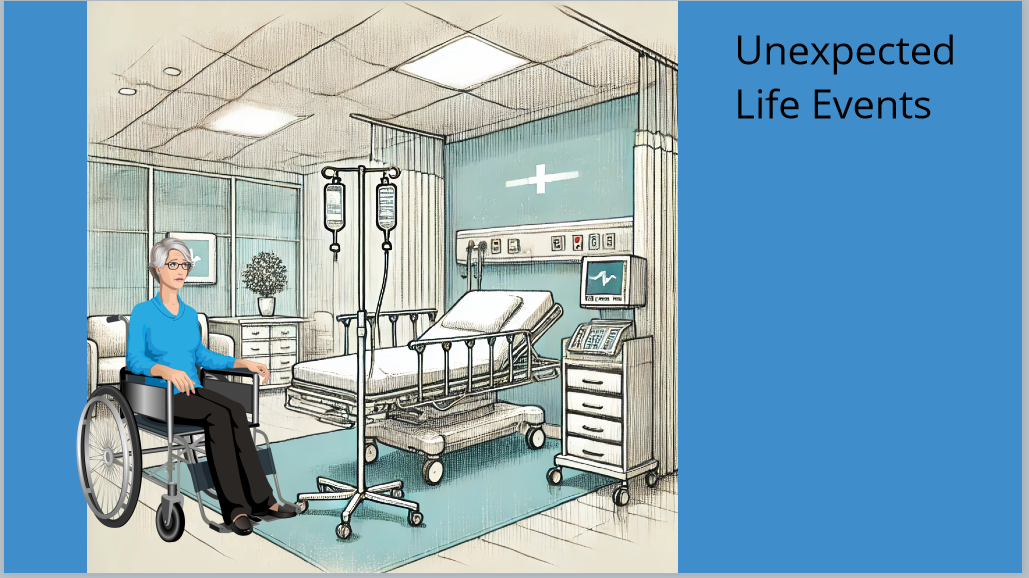
These are samples of my interactive storytelling approaches in eLearning courses.
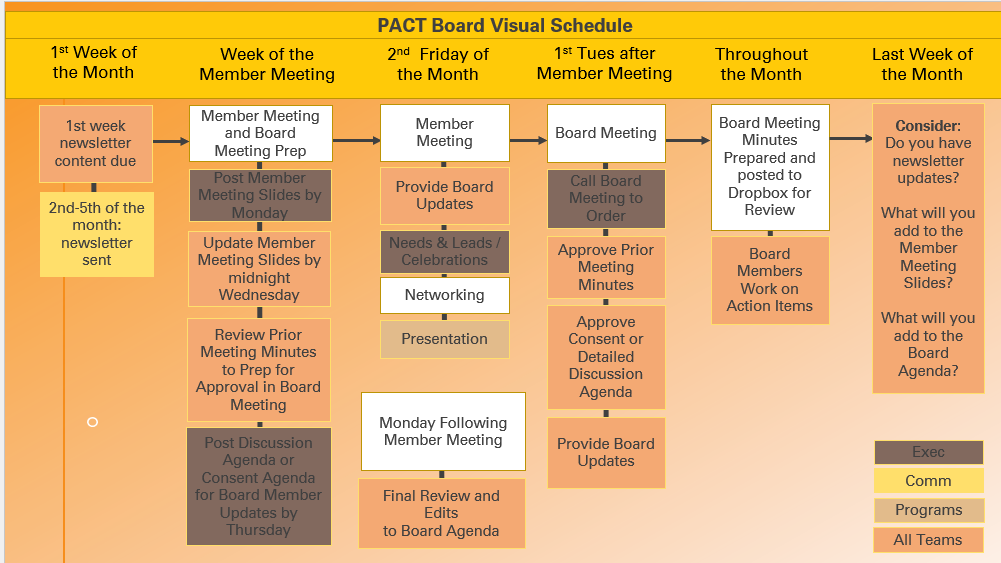
Leadership Opportunities: I started as Board President for PACT-MN in May, 2020. I managed several teams and prepared for one member meeting, and one Board meeting per month. To ensure that everyone understood their responsibilities and met unique deadlines, I created this visual schedule for the team.
Make it personal and solve a need:
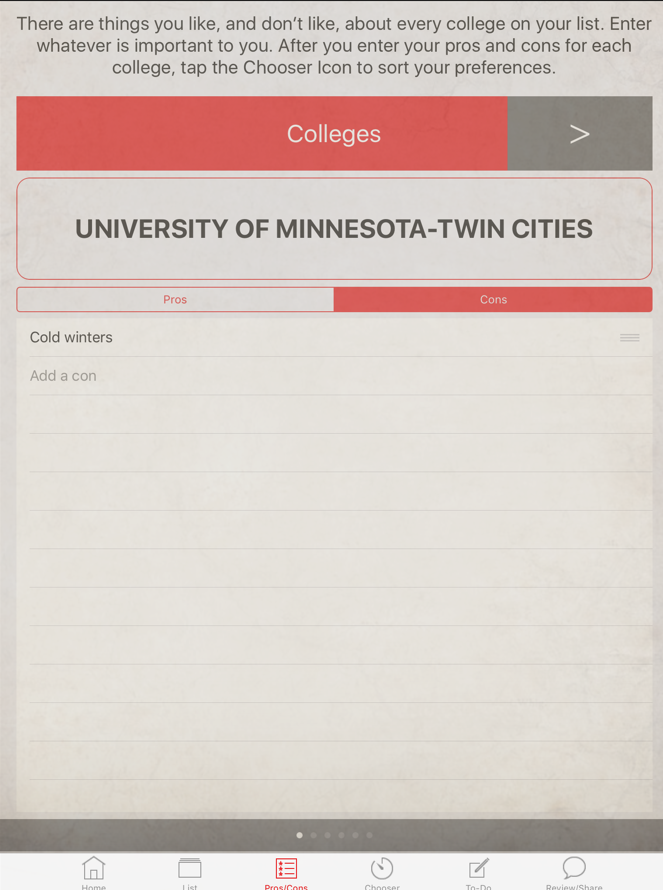
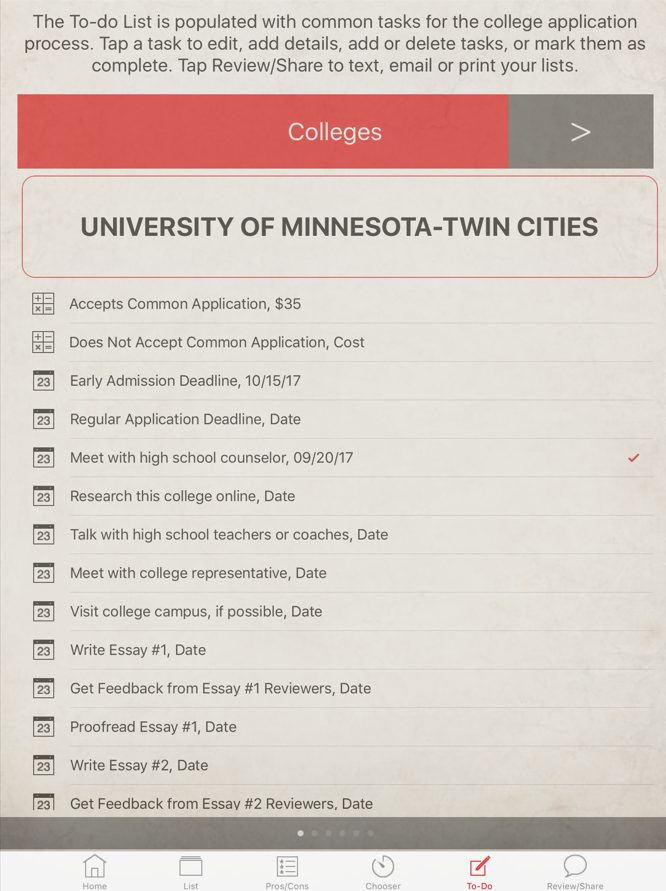
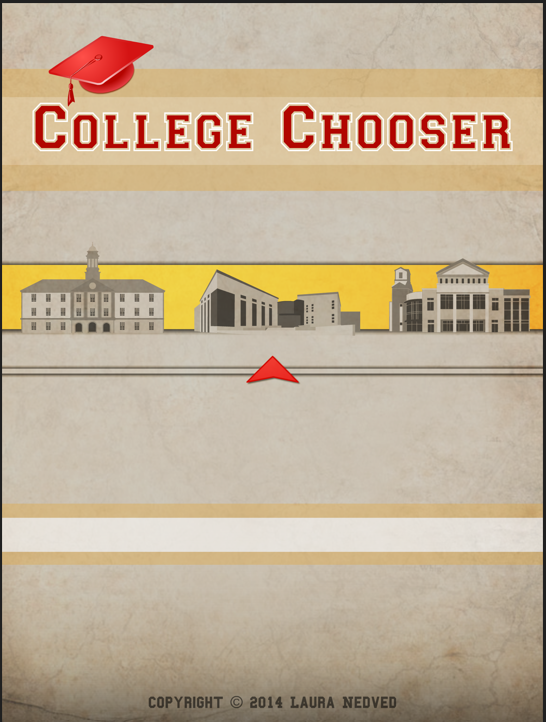
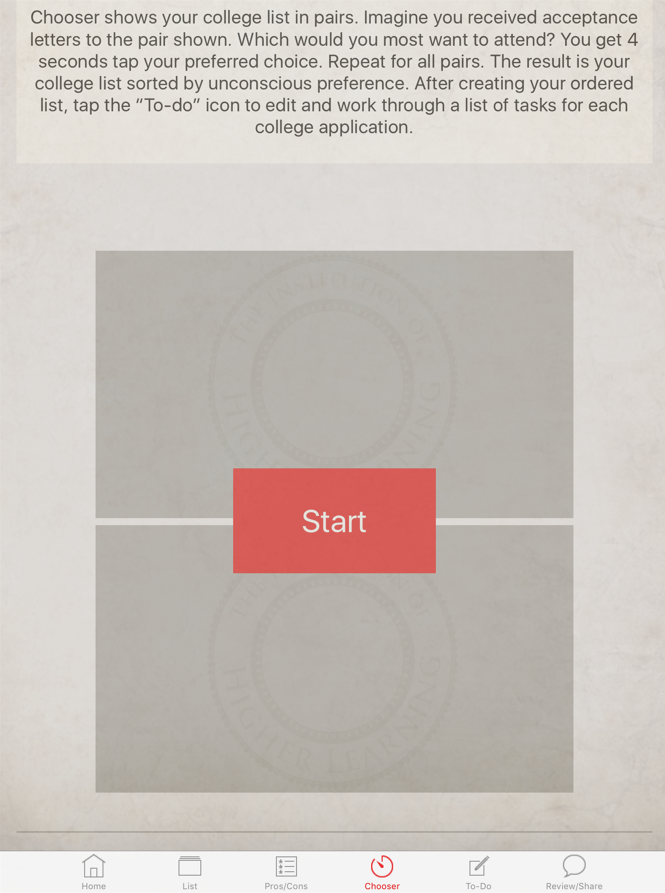
College Chooser Mobile App: In 2013, my daughter was stressing out over university choices and applications. I designed a mobile app to guide her. The app was available in the App Store and helped high school students select, manage, and track their progress—turning a personal need into a solution supporting teens.
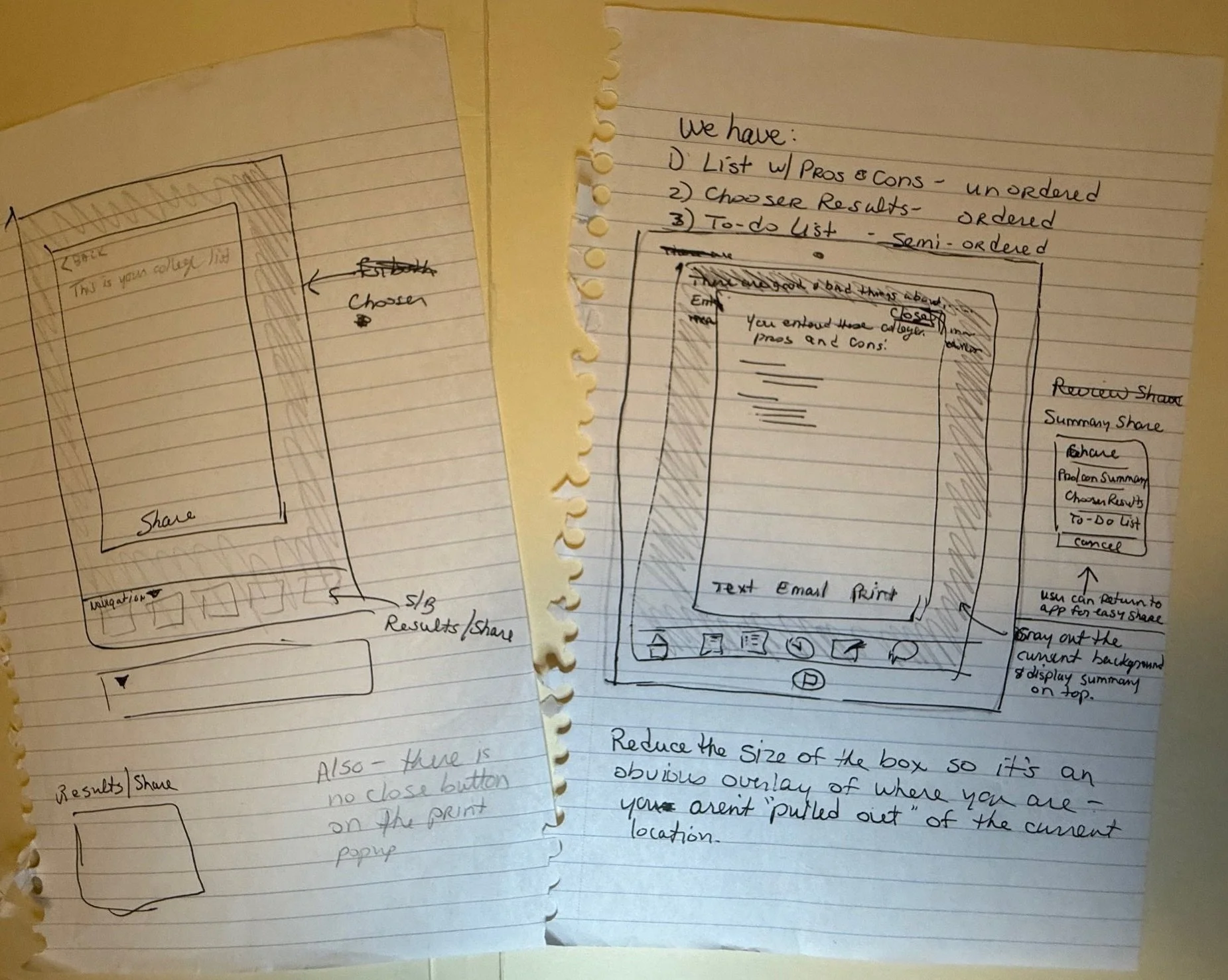
I started this adventure with a paper prototype on notecards. I then moved to sketches, and a prototype using my available eLearning software. The tools were well-suited for eLearning, but not for app design and development. This taught me a valuable lesson about the limitations of my tools and my knowledge.
Not to be easily discouraged, this became my first exploration into mobile app design and development. And, a humbling reminder of why I decided years earlier that I did not want to be a computer programmer.
I studied HTML and CSS, and explored books on Objective-C and XCode —then prototyped my idea in PowerPoint, and wound my way through my resource network to find my first app developer. I had to pitch him on the efficacy of my idea to get his buy-in. He helped expand my vocabulary from my decade of eLearning/LMS development to mobile app terminology — so I’m now technologically bilingual.
I also learned the meaning of that old saying that, “A boat is really just a hole in the water into which money is poured.” The same can be said of mobile app ownership. It was a great learning experience, and had some success in the App Store. It also became tiresome and costly to keep updating it whenever Apple updated their requirements. So that was fun!
Other Interesting Projects (Leadership, and problem-solving through technology)
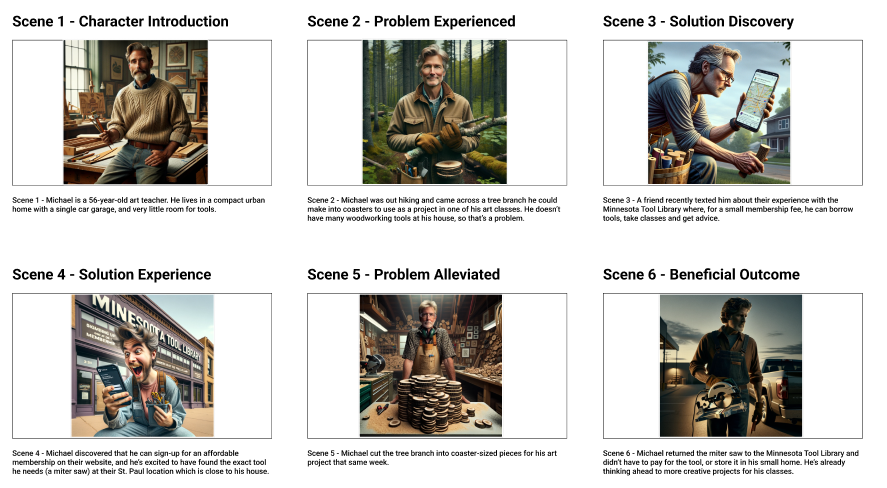
Responsive Website Redesign, AI for image generation - Redesign The Minnesota Tool Library needed a site make-over. This was a class / team project.
My Role: I participated throughout the research and design process, from SME interviews, to redlining the existing site, to user testing and affinity diagram, proto-persona, journey maps, wireframing, and low-, mid-, and high-fidelity prototypes. I also helped draft and present the solution.
The work I’m most proud of in this project are the user journey and images which I created using ChatGPT and Dall-E, the card-sorting activity which was very time-consuming as the original site contained a lot of redundant information, and a Bootstrap accordian interaction I installed in our high-fi prototype.
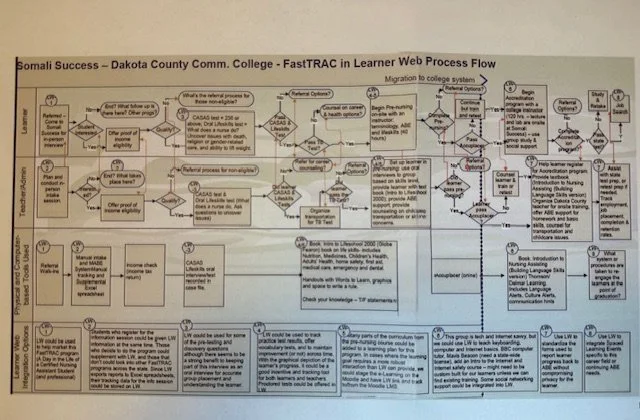
CX/Service Design: Learning Platform Expansion: Minnesota Adult Basic Education (ABE) partnered with Portland State University (PSU) to pilot their LearnerWeb software platform. This tool creates flexible curricula tracks for learners with specific needs (e.g.: U.S. Citizenship). The goal was to assess what might be required to expand the platform beyond the Pilot site to other ABE sites statewide.
My Role: I designed and conducted a feasibility study to evaluate the challenges and opportunities associated with scaling the platform. This included stakeholder interviews across multiple sites, developing combined journey maps covering: user—educator/admin—technology, and authoring the final feasibility report with actionable recommendations.
I went on to create more specific personas, user journey maps, and a presentation highlighting the key areas needing to be addressed, and presented the results to leaders from MN ABE, and PSU for consideration. Along with a path to expansion, my research revealed other challenges and gaps in the existing process needing additional customer supports.
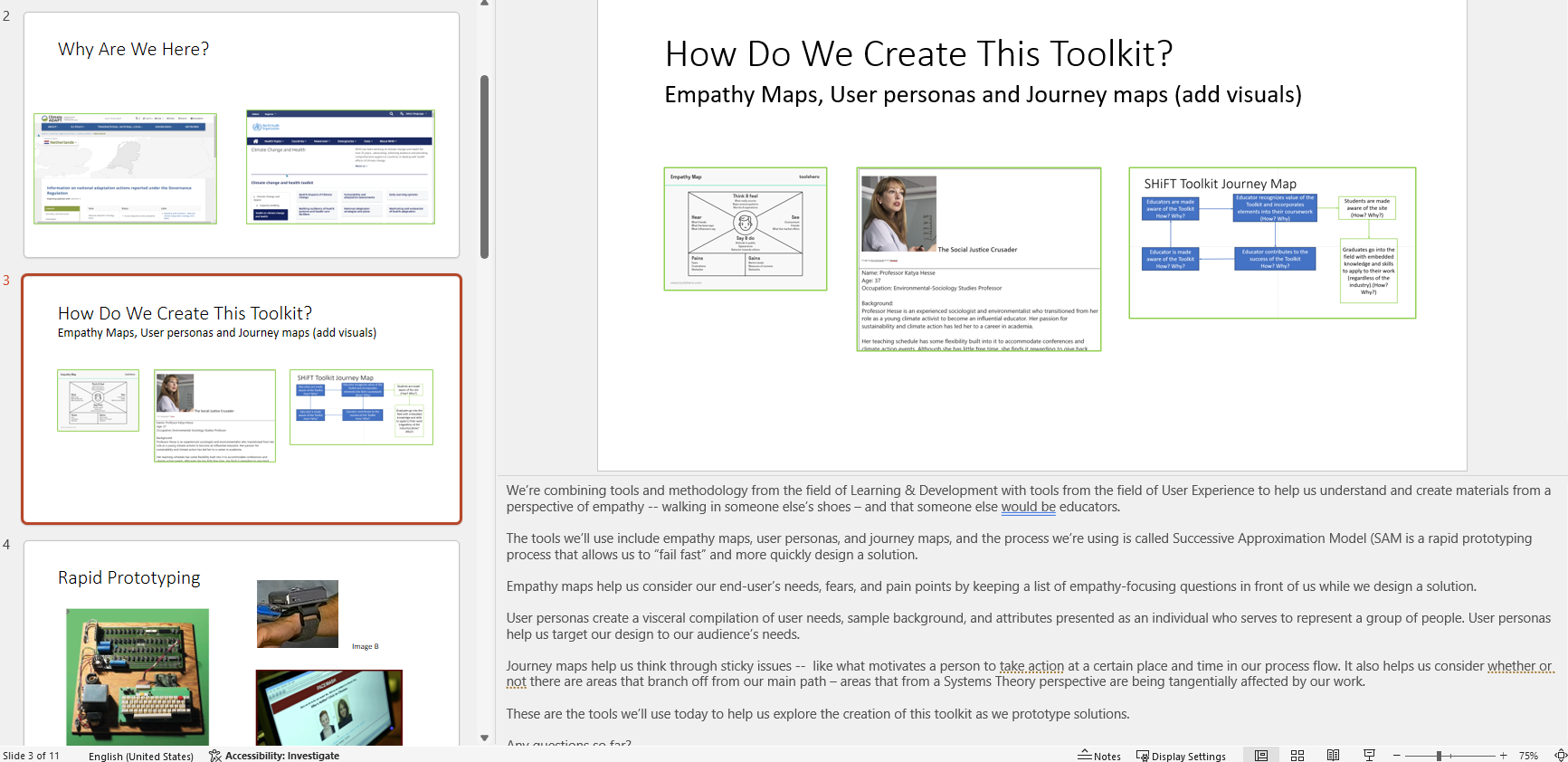
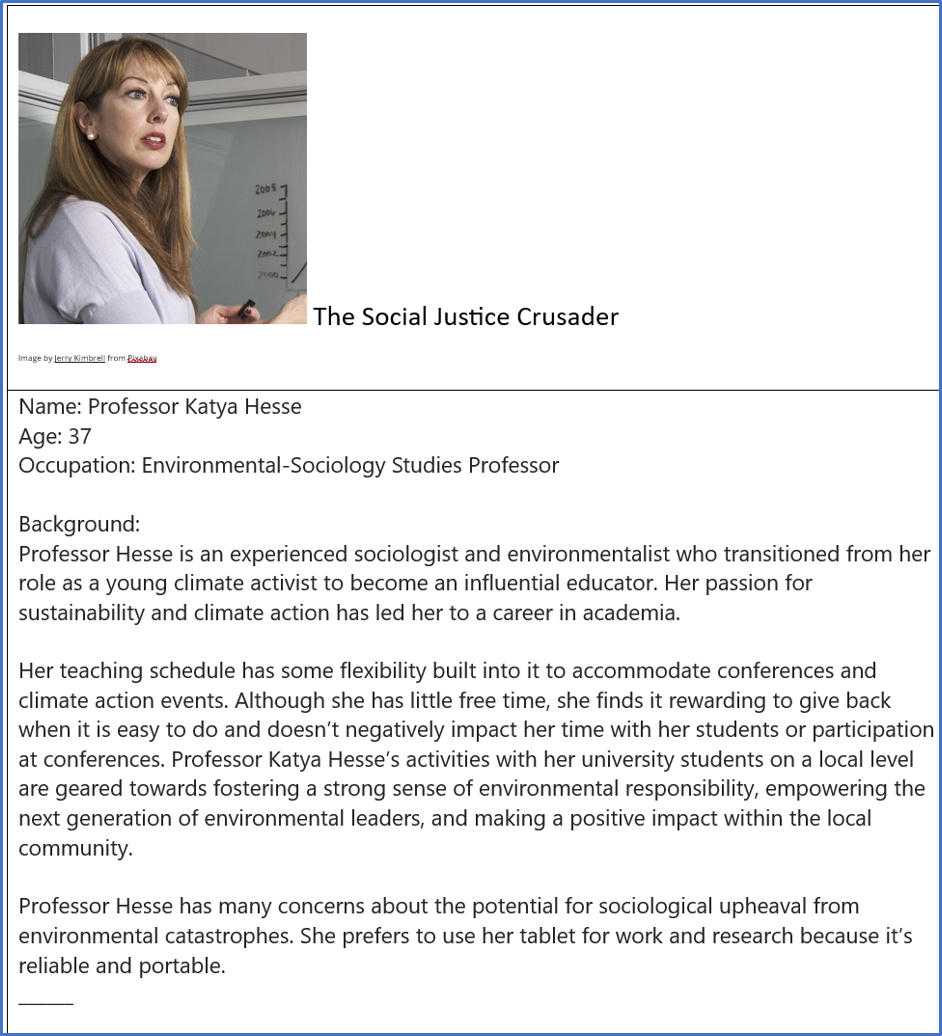
Rapid Prototyping Workshop - SHiFT – European Climate Change Project I was invited to consult on the design of a rapid prototyping workshop aimed at creating a toolkit for European Social Studies educators. The goal was to help teachers integrate climate change learning activities into their curricula using design thinking methodologies.
My Role:
I advised on workshop structure, sharing best practices for facilitating rapid prototyping using empathy maps, user personas, and journey maps. I contributed to the presentation materials, including visual examples and content for slides, and provided a complete practice scenario featuring a persona, empathy map, and journey map. I also created a set of proto-personas to use in breakout activities to support participant engagement and idea generation.